
Precision CNC Machining: A Comprehensive Solution for Manufacturing Machine Parts, Automotive Accessories & Boiler Equipment
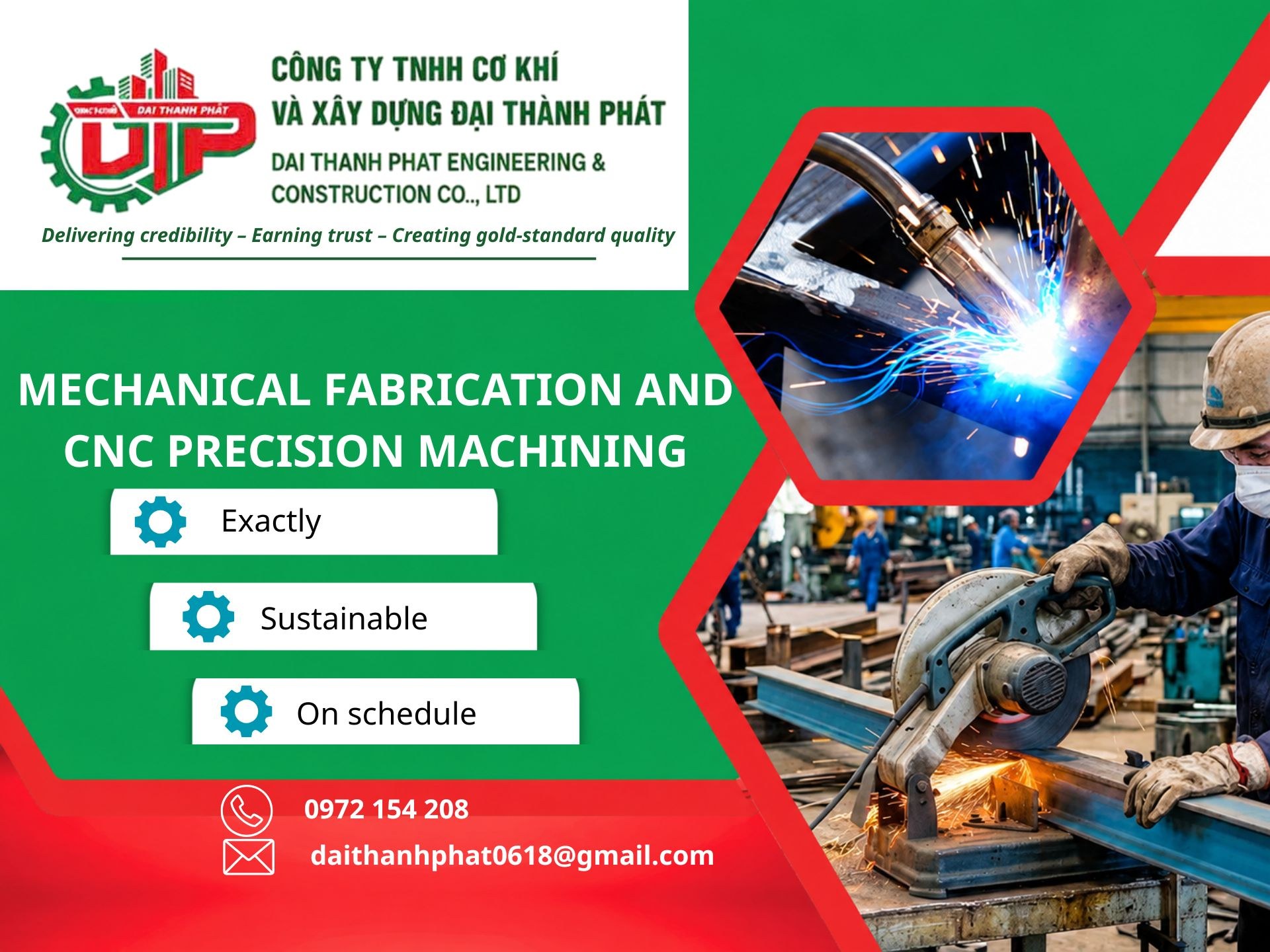
In the context of modern industry, precision is a vital factor. Today's machinery requires highly synchronized components. Precision CNC machining is the perfect solution. This technology helps manufacture extremely complex mechanical products.
Whether it's a machine part with minimal tolerance, a durable automotive accessory, or safe boiler equipment, CNC machines can handle it excellently. Let's explore this amazing machining process in detail.
1. What is Precision CNC Machining?
To begin, we need to clearly understand this concept. This is the foundation of the modern supporting industry.
The concept of CNC technology
CNC stands for Computer Numerical Control. Precision CNC machining uses computer software to control machinery. Cutting tools move along pre-programmed paths. This process carves a raw material block into a finished product. Every operation is fully automated.
Differences from traditional machining
Traditional machining relies heavily on the craftsman's skills. This easily leads to errors and inconsistency. Conversely, CNC machines provide absolute precision. The machinery operates continuously without fatigue. The manufactured products are identical in mass production. Production time is also significantly reduced. This helps businesses save on labor costs.
Importance in the supply chain
The industry is growing at a rapid pace. The demand for high-quality components has skyrocketed. CNC machining perfectly meets that demand. It helps factories master their supply of spare parts. Thereby, enhancing competitiveness in the international market.
2. Key Mechanical Manufacturing Sectors
CNC technology is applied in many fields. Below are the three most important manufacturing sectors today.
Manufacturing industrial machine parts
Industrial machinery is a complex system. They are made up of thousands of small details. Every part must fit together perfectly.
Strict tolerance requirements
Tolerance is the allowable error in product dimensions. In machine part manufacturing, tolerances must be extremely low. Sometimes it is only a thousandth of a millimeter. If the error is too large, the machinery will vibrate during operation. CNC machines completely solve this problem. They create smooth and precise surfaces.
Typical machinery components
Some common machine parts include drive shafts and gears. Flanges and industrial hinges are also heavily machined. These components need rigidity and good wear resistance. The precision machining process will guarantee that.
Producing mechanical accessories for the automotive industry
The automotive industry requires extremely strict quality standards. User safety is always the top priority.
The importance of mechanical durability
Automotive parts must work in harsh conditions. They must withstand impact forces and high temperatures. Therefore, materials and machining methods must be carefully selected. Modern CNC milling and turning machines can handle super-hard alloys. They create extremely durable accessories.
Practical applications on cars
Commonly CNC machined parts are suspension systems and chassis. Engine components and exhaust systems also require CNC. Precision helps the engine run more smoothly. It also helps the vehicle save fuel significantly.
Machining boiler equipment and components
Boilers are devices that provide heat for many factories. This is equipment with potential risks if manufactured incorrectly.
Absolute safety requirements
Boilers operate under extreme pressure and high temperatures. Every component must ensure absolute sealing. Pressure leaks can cause disastrous consequences. Therefore, mechanical manufacturing for boilers requires the highest technology. The threads and connecting flanges must be perfectly milled and turned.
High-pressure resistant components
Tube sheets and furnace covers are critical parts. Pressure valves and heat pipes are also essential. These parts are often made of special alloy steel. Only high-power CNC machines can machine these components.
3. Specialized Materials in CNC Machining
Choosing the right material is the first step to having a good product. Below are the most popular types of materials.
Alloy Steel and Stainless Steel (Inox)
Steel is an indispensable material in mechanics. Alloy steel has a very high hardness. It can withstand heavy loads and strong impacts.
In particular, stainless steel (Inox 304, Inox 316) stands out for its corrosion resistance. They do not rust even when working outdoors. This is the number one choice for boiler equipment. The food industry also highly prefers this material.
Aluminum and Aluminum alloys
Aluminum offers a great advantage: light weight. It is much lighter than steel but still ensures rigidity.
Besides, aluminum has excellent heat dissipation capabilities. The aluminum surface after machining is very shiny and beautiful. Aluminum is widely used to produce automotive accessories. Aerospace components are also made from aluminum alloys.
Copper and Special alloys
Red copper and brass have excellent electrical conductivity. Their thermal conductivity is also impressive.
Copper is often used to machine electronic components. Heat sinks or shaft bushings also favor this material. Copper has fairly good self-lubricating properties. This helps reduce friction when machine parts operate.
High-grade engineering plastics
Not only metals, but CNC machines can also machine plastics. Engineering plastics like POM, PTFE, or PEEK are very popular.
They have good electrical insulation and chemical corrosion resistance. Engineering plastics are generally lighter and easier to machine than metals. They are used to make small gears or sealing rings.
4. Standard B2B Precision Machining Process
A systematic process will create quality products. B2B customers always highly appreciate this professionalism.
Step 1: Analyzing technical drawings
Every project starts with a design drawing. The engineering team will receive 2D or 3D drawings from the customer. They will use specialized CAD/CAM software to analyze them. This step aims to assess the feasibility of the project. Any technical difficulties will be identified immediately.
Step 2: Planning and quoting
After analysis, the engineer will advise on choosing suitable materials. They also plan the fixturing and the sequence of operations.
The goal is to optimize production time and costs. Customers will receive a detailed and transparent quotation. All items are clearly listed.
Step 3: CNC machine programming (CAM)
This is the step of converting the drawing into machine language. The programming engineer will export G-code command lines.
These commands will specify the spindle's rotation speed. It also regulates the cutting tool's movement speed. An optimized program will bring a smooth machined surface. The cutting blade will also be better protected.
Step 4: Trial run and mass production
Before mass production, the workshop must always run a trial (FAI sample). The sample product will be carefully measured for parameters.
If all dimensions meet the standards, mass production will begin. At this point, the CNC machine will operate continuously. The worker only needs to monitor and replace the metal blanks.
Step 5: Quality control (QC) and handover
This is the final checkpoint before delivery. Products are inspected using modern measuring equipment.
3D Coordinate Measuring Machines (CMM) or digital calipers are commonly used. Any product with tolerances exceeding the threshold is rejected. Standard products will be carefully packaged. They are clearly labeled and handed over to the partner.
5. Criteria for Choosing a Reputable Machining Workshop
Finding the right machining partner is an important decision. It directly affects the quality of your project. So what are the criteria for evaluating a mechanical workshop?
Modern machinery and equipment
Machinery is the core weapon of a machining workshop. A reputable workshop must have a new-generation CNC machine system.
They need to be equipped with a variety of machinery. From 3-axis milling machines to advanced 5-axis milling machines. CNC lathes integrating high technology are also essential. Good machinery will ensure product precision. It also meets urgent delivery schedules.
Highly specialized personnel
Machines cannot create perfect products on their own. Behind them is human intelligence. The engineering team needs a good mindset for optimal programming.
The machine operators must have rich practical experience. They know how to flexibly handle any arising incidents. Humans are the soul of these dry CNC machines.
Commitment to schedule and information security
In B2B business, time is money. The machining partner must commit to delivering on time. Delays will disrupt an entire large production line.
Furthermore, design copyright is an invaluable asset. A reputable unit is always ready to sign a Non-Disclosure Agreement (NDA). They absolutely protect the customer's technical drawings.
6. Contact for CNC Machining Service Quotation
If you are looking for a reliable machining partner, do not hesitate to contact us. We are proud to be a leading precision machining workshop.
We specialize in providing manufacturing solutions for machine parts, automotive accessories, and boiler equipment. Our modern machinery system is always ready to serve you. Our dedicated engineering team will support you enthusiastically. Please send your drawings to us via Zalo or Email. You will receive a detailed quotation in the shortest time.
Hotline / Zalo: 0972154208
Email: daithanhphat0618@gmail.com
Workshop Address: Land Parcel No. 3320, Map Sheet No. 13, Rach Bap Residential Area, Long Nguyen Ward, Ho Chi Minh City, Vietnam.
We always desire to accompany the development of your business. Wishing you brilliant and successful projects!